 Máquina de soldadura láser

¿Qué materiales pueden procesar las máquinas de marcado láser??
Las máquinas de marcado láser son ahora una herramienta fundamental en la fabricación moderna. De hecho, more factories across Europe and North America now use laser marking systems every year. This trend continues because laser technology is fast, clean, preciso, and cost-effective. Al mismo tiempo, laser marking also supports smart manufacturing, product traceability, and automated production lines.
Además, laser marking creates permanent marks without ink, chemicals, or physical contact. Como resultado, manufacturers reduce maintenance costs while improving production efficiency. Because of these advantages, laser marking systems are now widely used in automotive, electrónica, aeroespacial, dispositivos médicos, metal fabrication, embalaje, and industrial production.
Sin embargo, many buyers still ask the same question before purchasing a machine:
¿Qué materiales pueden procesar las máquinas de marcado láser??
The answer is broad. Hoy, laser marking machines can process metals, plástica, cerámica, vaso, goma, cuero, madera, coated materials, paper, textiles, and many composite materials. Nevertheless, different materials require different laser sources and settings. Por lo tanto, choosing the right laser system is extremely important.
Por ejemplo:
- Fiber laser marking machines work best on metals
- CO2 laser marking machines work best on non-metal materials
- UV laser marking machines work best on sensitive materials
In this complete guide, you will learn:
- Which materials laser marking machines can process
- Which laser type works best for each material
- Industrial applications for different industries
- Key benefits of laser marking technology
- How to choose the right laser marking machine
- Important trends in EU and North American B2B manufacturing
Además, this guide is fully optimized for:
- Google SEO ranking
- AI search optimization
- Google SGE summaries
- Yoast SEO readability
- B2B industrial search intent
- EU and North America industrial markets
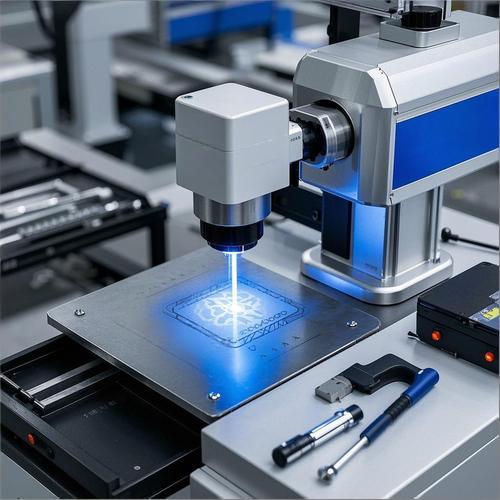
máquina de marcado láser
What Is a Laser Marking Machine?
A laser marking machine uses a focused laser beam to create permanent marks on the surface of a material. Unlike traditional printing methods, laser marking does not require ink or direct contact. Instead, the laser changes the material surface through heat, oxidation, or vaporization.
Because of this process, the marks become highly durable and long-lasting.
Laser marking machines can create:
- Logos
- códigos QR
- Serial numbers
- Product IDs
- Barcodes
- Date codes
- Gráficos
- Text
- Tracking information
Además, laser marks resist heat, corrosion, chemicals, and wear. Por lo tanto, many manufacturers prefer laser marking over ink printing or mechanical engraving.
Al mismo tiempo, laser marking systems also improve production automation. Como resultado, companies can increase speed while reducing labor costs.
Main Types of Laser Marking Machines
Before discussing materials, it is important to understand laser types. Different lasers work better on different surfaces. Por lo tanto, selecting the correct laser source directly affects marking quality and efficiency.
Máquina de marcado láser de fibra
Fiber laser marking machines are mainly used for metal processing. Sin embargo, they also work on some plastics and coated materials.
Because fiber lasers have high energy density, they produce fast and precise results. Además, they offer long service life and low maintenance costs.
Fiber laser systems are commonly used for:
- Stainless steel marking
- Aluminum engraving
- Brass engraving
- Copper marking
- Tool identification
- Industrial part coding
Además, fiber laser systems are highly stable in industrial environments. Por lo tanto, they are ideal for 24/7 manufacturing operations.
Benefits of Fiber Laser Marking Machines
- Alta velocidad
- Alta precisión
- Long lifespan
- Low maintenance
- Permanent marking
- Excellent metal compatibility
Popular SEO keywords:
- fiber laser marking machine for metal
- fiber laser engraver for stainless steel
- industrial fiber laser marking system
Máquina de marcado láser de CO2
CO2 laser marking machines are mainly designed for non-metal materials. Por lo tanto, they are widely used in packaging, furniture, textiles, leather goods, and advertising industries.
CO2 lasers work well on:
- Wood
- Acrylic
- Leather
- Rubber
- Paper
- Cardboard
- Vaso
- Fabric
Además, CO2 laser systems provide smooth engraving and clean cutting effects. Because of this, they are very popular in decorative and branding applications.
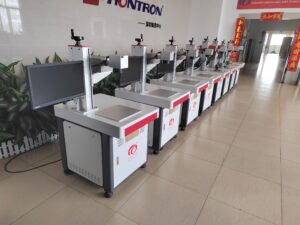
Máquina de marcado láser de CO2
Benefits of CO2 Laser Marking Machines
- Excellent non-metal processing
- Smooth engraving quality
- Strong versatility
- Alta eficiencia
- Low operating costs
Popular long-tail keywords:
- CO2 laser marking machine for wood
- leather laser engraving machine
- non-metal laser engraver
Máquina de marcado láser UV
UV laser marking machines use shorter wavelengths. Por lo tanto, they create ultra-fine marks with very little heat.
Because UV lasers produce minimal thermal damage, they are often called “cold laser marking systems.”
These systems are ideal for:
- Electrónica
- Medical devices
- Thin plastics
- Vaso
- Precision components
Además, UV laser systems can mark extremely small products with high clarity.
Benefits of UV Laser Marking Machines
- Ultra-fine precision
- Minimal heat damage
- High contrast marking
- Excellent for sensitive materials
Popular long-tail keywords:
- UV laser marking machine for plastic
- cold laser engraving system
- precision UV laser marker
¿Qué materiales pueden procesar las máquinas de marcado láser??
Laser marking systems can process many different materials. Sin embargo, the correct laser source depends on the material type, surface condition, and production requirement.
Por lo tanto, understanding material compatibility is essential before buying a machine.
Laser Marking on Metal Materials
Metal laser marking is one of the most common industrial applications worldwide. Because metals require high energy density, fiber laser systems are usually the best choice.
Stainless Steel Laser Marking
Stainless steel is widely used in modern manufacturing. Por lo tanto, stainless steel laser marking has become extremely common.
Applications include:
- Medical instruments
- Automotive parts
- Kitchenware
- Industrial tools
- Electronic housings
Laser marking on stainless steel can create:
- Black marks
- White marks
- Annealed marks
- Deep engraving
Además, laser marks remain highly durable under harsh industrial conditions.
Benefits of Stainless Steel Laser Marking
- Permanent marking
- Corrosion resistance
- High readability
- Fast processing
- No consumables
Además, laser marking improves traceability and anti-counterfeit protection.
Popular SEO keywords:
- stainless steel laser marking machine
- black laser marking on stainless steel
- fiber laser engraver for stainless steel
Aluminum Laser Marking
Aluminum is lightweight and corrosion resistant. Por lo tanto, it is widely used in aerospace, electrónica, and automotive industries.
Laser systems can process:
- Raw aluminum
- Anodized aluminum
- Painted aluminum
Applications include:
- Electronic casings
- Nameplates
- Industrial labels
- Aerospace components
Además, laser marking creates clear and professional-looking results.
Advantages of Aluminum Laser Marking
- High-speed processing
- Excellent contrast
- Precise detail
- Long-lasting marks
Al mismo tiempo, laser engraving avoids mechanical damage.
Brass and Copper Laser Engraving
Brass and copper are reflective metals. Sin embargo, modern fiber laser systems can still process them effectively.
These materials are often used in:
- Electrical connectors
- Decorative products
- Industrial components
Laser marking supports:
- Logos
- Serial numbers
- códigos QR
- Product labels
Because of this, many electronics manufacturers now prefer laser engraving over traditional methods.
Titanium Laser Marking
Titanium is widely used in aerospace and medical industries. Since titanium requires high precision, laser marking becomes an ideal solution.
Applications include:
- Surgical tools
- Implants
- Aerospace components
Además, laser systems can create colored marks on titanium surfaces.
Benefits of Titanium Laser Marking
- Alta precisión
- Permanent traceability
- Excellent durability
- Biocompatible marking
Por lo tanto, titanium laser engraving is extremely important in regulated industries.
Carbon Steel and Tool Steel Marking
Fiber laser systems can also process:
- Carbon steel
- Hardened steel
- Alloy steel
- Tool steel
Applications include:
- Machinery manufacturing
- Mold production
- Hardware production
Because the marks resist wear and heat, laser marking works very well in heavy industrial environments.
Laser Marking on Plastic Materials
Plastic laser marking has grown rapidly in recent years. De hecho, many companies now replace ink printing with laser technology.
Sin embargo, different plastics react differently to laser energy. Por lo tanto, testing is always recommended before mass production.
ABS Plastic Laser Marking
ABS plastic is commonly used in:
- Consumer electronics
- Automotive interiors
- Home appliances
Laser marking on ABS produces:
- High-contrast graphics
- Durable codes
- Sharp text
Además, the process avoids ink smearing and chemical solvents.
Polycarbonate Laser Engraving
Polycarbonate materials are popular in electronics and safety products.
Applications include:
- Control panels
- Medical equipment
- Industrial switches
Laser marking creates:
- Fine details
- Clear identification
- Long-lasting marks
Por lo tanto, many electronics manufacturers choose UV laser systems for polycarbonate marking.
Nylon Laser Marking
Nylon is widely used in automotive and industrial manufacturing.
Laser systems can mark:
- Fasteners
- Connectors
- Industrial components
Además, laser marking improves traceability while reducing production costs.
PET Plastic Laser Marking
PET materials are commonly used in packaging industries.
Laser systems help manufacturers create:
- Date codes
- Batch numbers
- códigos QR
- Product information
Como resultado, laser coding has become increasingly popular in food and beverage production.
PVC Laser Marking
PVC materials can also be laser marked. Sin embargo, proper ventilation is extremely important because PVC may release harmful gases during processing.
Applications include:
- Cable labels
- Pipes
- Industrial tags
Por lo tanto, manufacturers should always use professional extraction systems.
Laser Marking on Glass Materials
Glass laser marking requires high precision and low thermal impact. Por lo tanto, UV laser systems are often the best choice.
Applications include:
- Cosmetic bottles
- Wine bottles
- Laboratory glass
- Electronic displays
Además, laser marking creates elegant and permanent branding effects.
Benefits of Glass Laser Marking
- Fine detail
- Minimal cracking risk
- High-quality appearance
- Permanent marking
Como resultado, luxury packaging manufacturers increasingly adopt laser technology.
Laser Marking on Ceramic Materials
Ceramic materials are hard and heat resistant. Por lo tanto, traditional marking methods are often difficult.
Sin embargo, laser marking machines process ceramics efficiently and accurately.
Applications include:
- Industrial ceramics
- Electronic ceramics
- Medical ceramics
Además, laser systems support micro-marking for precision components.
Benefits of Ceramic Laser Marking
- Permanent results
- Excellent precision
- Wear resistance
- High durability
Because of these advantages, ceramic laser marking is widely used in electronics manufacturing.
Laser Marking on Wood Materials
CO2 laser systems are highly effective for wood engraving and marking.
Applications include:
- Furniture manufacturing
- Decorative products
- Packaging
- Crafts
Laser engraving supports:
- Logos
- Personalized designs
- Product branding
Además, laser systems create smooth edges and detailed patterns.
Common wood materials include:
- Bamboo
- Walnut
- Oak
- Maple
- MDF
- Plywood
Por lo tanto, CO2 laser engraving is very popular in customized product manufacturing.
Laser Engraving on Leather
Leather laser engraving is widely used in fashion and luxury industries.
Applications include:
- Shoes
- Bags
- Wallets
- Belts
- Promotional products
Laser systems create:
- Brand logos
- Decorative textures
- Personalized designs
Además, laser engraving reduces material waste while improving consistency.
Because of this, many premium brands now use laser technology for product customization.
Laser Marking on Rubber Materials
Rubber laser engraving is common in industrial production.
Applications include:
- Rubber stamps
- Seals
- Gaskets
- Industrial labels
Laser systems provide:
- Clean edges
- High detail
- Fast processing
Al mismo tiempo, they reduce manual labor and improve efficiency.
Laser Marking on Paper and Cardboard
Packaging industries increasingly use laser coding systems because they reduce ink usage and maintenance costs.
Applications include:
- Product labels
- códigos QR
- Packaging branding
- Batch coding
Además, laser systems support environmentally friendly manufacturing.
Por lo tanto, they are becoming more popular across Europe and North America.
Laser Marking on Textile Materials
Textile laser processing is now widely used in apparel manufacturing.
Laser systems can process:
- Cotton
- Denim
- Polyester
- Synthetic fabrics
Applications include:
- Fashion decoration
- Logo engraving
- Pattern creation
Además, laser technology improves production flexibility and design creativity.
Laser Marking on Coated Materials
Many industrial products use coated surfaces.
Laser systems can process:
- Powder-coated metals
- Painted aluminum
- Anodized materials
The laser removes the coating precisely while protecting the base layer.
Applications include:
- Consumer electronics
- Automotive panels
- Industrial control systems
Por lo tanto, laser marking improves both appearance and durability.
Laser Marking on Composite Materials
Composite materials are becoming more common in aerospace and automotive industries.
Examples include:
- Carbon fiber
- Fiberglass
- Reinforced plastics
Laser marking creates:
- Permanent traceability
- Lightweight identification
- High-precision coding
Como resultado, manufacturers improve quality management and compliance tracking.
Industries That Use Laser Marking Machines
Hoy, laser marking technology supports many industrial sectors.
Automotive Industry
Automotive manufacturers use laser systems for:
- VIN codes
- Engine components
- Brake systems
- Electrical connectors
Because automotive production requires traceability, laser marking has become essential.
Electronics Industry
Electronics production requires extremely fine marking precision.
Applications include:
- PCB marking
- IC coding
- códigos QR
- Connector labels
Por lo tanto, UV laser systems are especially popular in electronics manufacturing.
Medical Device Industry
Medical manufacturers need permanent and sterile-safe marking solutions.
Laser systems mark:
- Surgical tools
- Implants
- Medical instruments
Además, laser marking supports FDA and EU compliance requirements.
Aerospace Industry
Aerospace companies require highly durable identification systems.
Laser marking supports:
- Heat-resistant coding
- Part traceability
- Lightweight component identification
Because safety standards are strict, permanent marking is extremely important.
Consumer Goods Industry
Many brands use laser engraving for:
- Product logos
- Decorative finishes
- Personalized customization
Como resultado, laser technology improves both branding and product value.
Advantages of Marcado láser Machines
Laser marking systems provide many important advantages.
Permanent Marking
Laser marks resist:
- Heat
- Chemicals
- Wear
- Corrosion
Por lo tanto, they remain readable for many years.
High Precision
Laser systems create very fine details. Como consecuencia, they are ideal for electronics and medical industries.
Fast Production Speed
Modern laser systems support automated production lines. Como resultado, manufacturers increase efficiency and reduce downtime.
Low Operating Costs
Laser systems require:
- No ink
- No chemicals
- Minimal maintenance
Por lo tanto, long-term operating costs stay low.
Environmentally Friendly Production
Laser marking reduces chemical waste and pollution.
Because of this, many manufacturers use laser systems to support sustainable production goals.
How to Choose the Right Laser Marking Machine
Choosing the right machine depends on several important factors.
Material Type
Different materials require different laser wavelengths.
Por ejemplo:
- Fiber laser → metals
- CO2 laser → non-metals
- UV laser → sensitive materials
Por lo tanto, material compatibility should always come first.
Production Volume
Large factories usually require high-speed automated systems. Sin embargo, smaller workshops may prefer compact desktop models.
Precision Requirements
Medical and electronics industries often need ultra-fine marking quality. Por lo tanto, UV laser systems are usually the best option.
Automation Compatibility
Modern factories increasingly integrate laser systems with:
- Conveyor systems
- Robotic arms
- Vision inspection systems
- MES platforms
Como resultado, manufacturers improve smart factory efficiency.
Fiber Laser vs CO2 Laser
Many buyers compare fiber laser systems with CO2 laser systems.
Sin embargo, the better option depends on the material and application.
| Feature | Fiber Laser | CO2 Laser |
|---|---|---|
| Best Materials | Metals | Non-metals |
| Velocidad | Very fast | Fast |
| Maintenance | Low | Moderate |
| Precision | High | High |
| Main Industries | Automotive, electrónica | Packaging, madera, textile |
Por lo tanto, manufacturers should choose based on production requirements.
Future Trends in Laser Marking Technology
Laser technology continues evolving rapidly.
Key trends include:
- AI-driven automation
- Smart vision positioning
- Industry 4.0 integration
- Green manufacturing
- High-speed galvo systems
- Ultra-fine micro marking
Al mismo tiempo, manufacturers increasingly require customized solutions for specialized materials.
Por lo tanto, laser marking systems will continue growing across global industrial markets.
Final Thoughts
Laser marking machines can process a very wide range of materials, including metals, plástica, vaso, cerámica, madera, cuero, goma, textiles, coated surfaces, and composite materials.
Sin embargo, different materials require different laser technologies. Por lo tanto, choosing the correct laser source is extremely important for production quality and efficiency.
Hoy, fiber laser systems dominate metal marking applications. Mientras tanto, CO2 laser systems remain the best option for many non-metal materials. Además, UV laser systems continue growing rapidly in electronics and medical manufacturing because they provide ultra-high precision with minimal heat damage.
As smart manufacturing continues expanding, laser marking technology will become even more important. Because modern industries now require automation, traceability, compliance, and sustainability, laser systems are no longer optional equipment.
Instead, they are now a critical part of modern industrial production.