 Lazer Kaynak Makinesi

Kalıp Lazer Kaynak Makinesi Nedir?? Complete Guide to Precision Mold Repair and Industrial Laser Welding Solutions
A mold laser welding machine is a specialized laser welding system designed for repairing, modifying, and maintaining industrial molds with extremely high precision.
Unlike traditional welding methods, a mold laser welding machine uses a focused laser beam to melt and join metal materials in a controlled area. Öyleyse, it can repair small cracks, worn edges, broken corners, and damaged surfaces without causing major heat damage to the mold.
Bugün, mold laser welding technology is widely used in industries such as automotive, plastic injection molding, elektronik, havacılık, medical devices, and precision manufacturing.
Because modern manufacturing requires higher accuracy and longer mold life, companies increasingly choose laser welding machines for mold repair instead of traditional repair methods.
In simple terms, a mold laser welding helps manufacturers:
- Repair expensive molds quickly
- Extend mold service life
- Reduce replacement costs
- Improve production efficiency
- Maintain high product quality
Why Are Mold Laser Welding Machines Important for Modern Manufacturing?
Molds are essential tools in many manufacturing processes. They are used to produce plastic parts, metal components, electronic products, and precision industrial parts.
Fakat, during long-term production, molds experience:
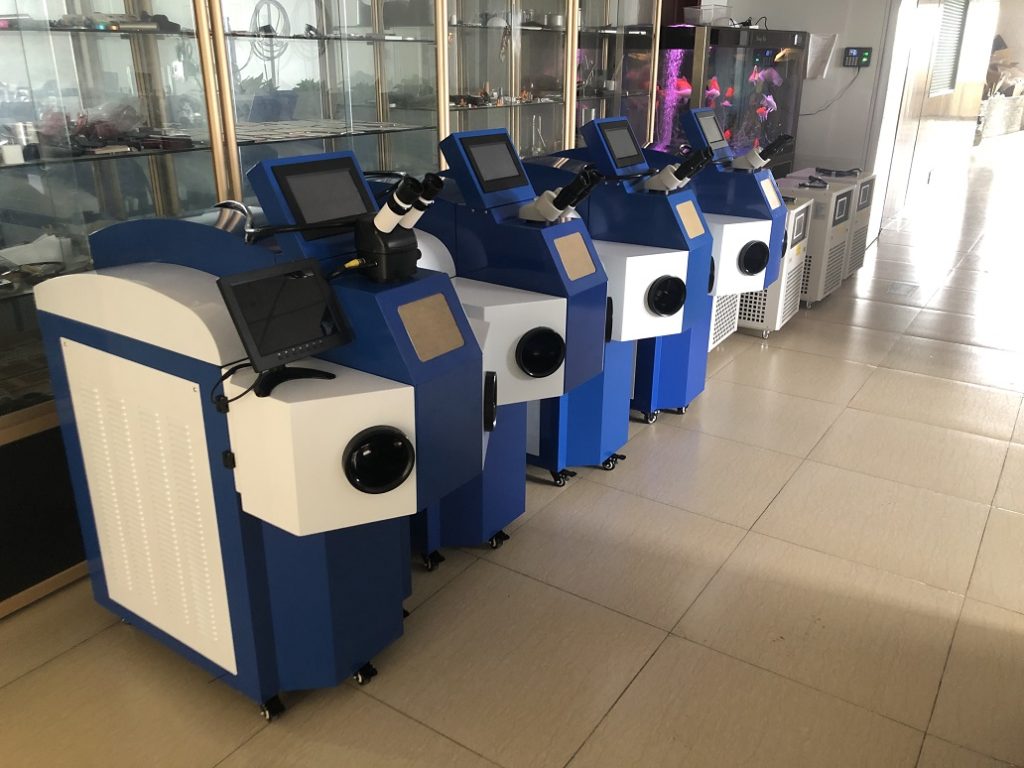
Jewelry Welding Machine Showcase
- Mechanical wear
- Surface damage
- Cracks
- Edge deformation
- Corrosion
- Dimensional changes
Previously, manufacturers often used methods such as:
- TIG welding
- Argon arc welding
- Manual welding
- Grinding and polishing repair
Although these methods can repair molds, they often create problems.
Örneğin:
- Large heat affected areas
- Mold deformation
- Difficult precision control
- More finishing work required
Öyleyse, manufacturers now prefer precision mold laser welding machines because they provide a cleaner and more accurate repair process.
How Does a Mold Laser Welding Work?
A mold laser welding machine works by using a high-energy laser beam to create localized heat.
The basic process includes four steps:
1. Laser Beam Generation
Birinci, the laser source generates a powerful laser beam.
Modern systems usually use:
- Fiber laser technology
- Nd:YAG laser technology
These lasers provide stable energy output and excellent welding accuracy.
2. Laser Beam Focusing
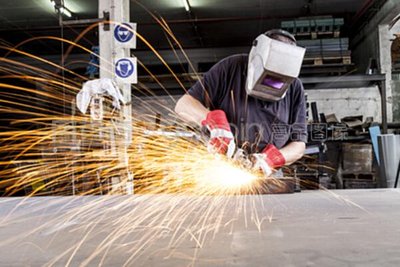
Laser welding machine industry
Sonraki, the laser beam passes through an optical system.
The system focuses the energy into a very small welding area.
Sonuç olarak:
- Heat input is controlled
- Surrounding areas remain unaffected
- Precision welding becomes possible
3. Metal Melting and Bonding
When the laser reaches the mold surface, the energy melts the repair material and the damaged area.
The filler wire is added into the welding area when required.
Then, the melted metal combines with the original mold material.
After cooling, the repaired area becomes strong and stable.
4. Finishing Process
Nihayet, operators can perform:
- Polishing
- Grinding
- Surface treatment
Because laser welding creates a small heat affected zone, less finishing work is needed compared with traditional welding.
Main Features of a Mold Laser Welding
A professional kalıp tamir lazer kaynak makinesi includes several advanced features.
High Precision Laser Welding Capability
The biggest advantage of a mold laser welding machine is precision.
The laser beam can focus on very small areas.
Öyleyse, it can repair:
- Fine cracks
- Sharp edges
- Small cavities
- Precision mold surfaces
This makes laser welding ideal for complex molds.
Low Heat Input Technology
Traditional welding methods produce large amounts of heat.
Fakat, laser welding uses concentrated energy.
Sonuç olarak:
- Less thermal deformation occurs
- Mold accuracy is maintained
- Material structure is protected
This feature is especially important for expensive precision molds.
Automatic Welding Control
Many modern systems include:
- CNC kontrolü
- Automatic positioning
- Programmable welding paths
- Digital parameter settings
Öyleyse, operators can achieve repeatable repair results.
Wide Material Compatibility
A mold laser welding can repair many types of metals, içermek:
- Tool steel
- Stainless steel
- Aluminum alloy
- Copper alloy
- Hardened steel
Öyleyse, it can support many industrial applications.
Mold Laser Welding Machine vs Traditional Welding Methods
Choosing the right repair method directly affects production cost and quality.
The following comparison explains why laser welding is becoming more popular.
| Feature | Lazer kaynak | Traditional Welding |
|---|---|---|
| Precision | Very high | Medium |
| Heat damage | Very low | Higher |
| Repair area | Very small | Larger |
| Mold deformation | Minimal | Possible |
| Finishing work | Less | Daha |
| Automation | Available | Limited |
Because of these advantages, laser welding has become a preferred solution for high-value mold repair.
Types of Mold Laser Welding Machines
Different production environments require different laser welding solutions.
1. Manual Mold Laser Welding
A manual mold laser welding machine is suitable for flexible repair work.
Operators manually control:
- Welding position
- Laser movement
- Repair speed
It is commonly used for:
- Mold maintenance workshops
- Small batch production
- Complex repair tasks
2. Automatic Mold Laser Welding Machine
An automatic mold laser welding machine improves production efficiency.
It can include:
- Automatic platforms
- CNC movement systems
- Programmable welding paths
- Robotic operation
Öyleyse, it is suitable for manufacturers that need stable and repeatable results.
3. CNC Mold Laser Welding System
A CNC mold laser welding system provides advanced automation.
It allows:
- Precise movement control
- Digital repair programs
- Multi-axis operation
This type of system is widely used in large manufacturing facilities.
Applications of Mold Lazer kaynak Machines
Mold laser welding technology supports many industries.
Automotive Mold Repair Applications
The automotive industry uses molds for:
- Interior parts
- Exterior panels
- Engine components
- Plastic injection parts
During production, molds may suffer from:
- Wear
- Impact damage
- Surface defects
A mold laser welding can quickly restore the mold surface.
Sonuç olarak, manufacturers reduce downtime and maintain production schedules.
Plastic Injection Mold Repair
Plastic injection molds require high accuracy.
Even small surface damage can affect final product quality.
Laser welding helps repair:
- Mold cavities
- Parting lines
- Cooling channels
- Surface defects
Because the welding area is controlled, the original mold shape remains accurate.
Die Casting Mold Repair
Die casting molds operate under:
- High pressure
- High temperature
- Repeated cycles
Öyleyse, they require strong repair solutions.
A laser welding machine for mold repair can restore damaged areas while maintaining mold performance.
Precision Electronics Mold Repair
Electronics manufacturing requires extremely accurate molds.
Laser welding is commonly used for:
- Connector molds
- Micro molds
- Precision tooling
Because the laser process creates minimal deformation, it supports high-precision production.
Medical Device Mold Repair
Medical manufacturing requires strict quality standards.
Laser welding helps maintain:
- Clean surfaces
- Accurate dimensions
- Long mold life
Öyleyse, it is widely used for medical plastic molds and precision components.