 Spawarka laserowa

How Does a Handheld Laser Welding Machine Work?
Introduction to Handheld Laser Welding Technology
A handheld laser welding machine is an advanced welding system that uses a high-energy laser beam to join metal parts together. Unlike traditional welding methods, this technology uses concentrated laser energy instead of an electric arc or physical welding tool.
Dzisiaj, handheld laser welding machines are becoming increasingly popular in global manufacturing. This is because companies need faster production, better weld quality, and more flexible welding solutions.
In the past, manufacturers mainly depended on TIG welding, MIG welding, and other traditional welding processes. Jednakże, these methods often required skilled operators, longer processing times, and additional grinding work.
By comparison, a handheld fiber laser welding machine provides faster welding speed, cleaner weld seams, i łatwiejsza obsługa. Dlatego, many industries are now adopting portable laser welding technology to improve production efficiency.
Ponadto, handheld laser welding systems are designed for flexibility. Operators can easily move the welding gun and process different metal structures without complex fixtures.
W rezultacie, this technology is widely used in:
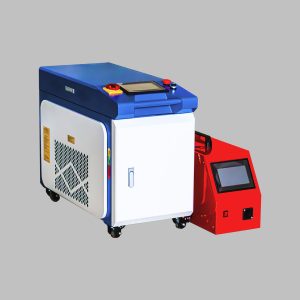
Laser welding machine
- Stainless steel fabrication
- Sheet metal manufacturing
- Automotive parts production
- Kitchen equipment manufacturing
- Produkcja mebli metalowych
- Machinery repair
- Industrial maintenance
So, how does a handheld laser welding machine work?
Simply put, the machine converts electrical energy into a powerful laser beam. Następnie, the focused laser energy melts the metal surface and creates a strong welded joint.
What Is a Handheld Laser Welding Machine?handheld laser welding machine
A handheld laser welding machine is a portable welding device that uses fiber laser technology to perform precise metal joining.
The system usually includes several key components:
- Fiber laser source
- Handheld welding gun
- Laser control system
- Cooling system
- Wire feeding system
- Protective safety system
Each component plays an important role in the welding process.
For example, the fiber laser source generates the laser beam. Meanwhile, the welding gun controls the direction and focus of the laser energy.
Ponadto, the control system allows operators to adjust welding parameters, w tym:
- Laser power
- Welding speed
- Beam width
- Pulse settings
- Wire feeding speed
Dlatego, operators can optimize the welding process based on different materials and applications.
W porównaniu z tradycyjnym sprzętem spawalniczym, handheld laser welding machines provide a more modern and efficient solution.
The Basic Working Principle of a Handheld Laser Welding Machine equipment
Step 1: Laser Generation
The welding process starts inside the fiber laser source.
The laser generator converts electrical energy into high-intensity laser energy. After that, the laser beam travels through the optical fiber system.
Because fiber transmission has very low energy loss, the laser beam maintains excellent stability.
W rezultacie, the machine can provide consistent welding performance during long production periods.
Step 2: Laser Beam Transmission
After the laser beam is generated, it travels through a flexible fiber cable.
This design provides several benefits:
- Stable laser delivery
- Long transmission distance
- Flexible operation
- Reduced energy loss
Więc, operators can move the handheld welding gun freely around complex workpieces.
This flexibility is one of the biggest differences between handheld laser welding machines and traditional welding systems.
Step 3: Laser Beam Focusing
Inside the handheld welding gun, optical lenses focus the laser beam into a small and powerful spot.
Because the energy density becomes extremely high, the metal surface quickly reaches melting temperature.
W rezultacie, the welding process happens with high precision and minimal heat impact.
Ponadto, the focused laser beam allows manufacturers to create narrow and clean weld seams.
Step 4: Metal Melting and Welding Formation
When the laser beam contacts the metal surface, the material absorbs the laser energy.
Następnie, the surface temperature increases rapidly.
Więc:
- The metal begins to melt.
- A small molten pool forms.
- The melted materials combine together.
- The molten area cools and becomes a strong weld joint.
Because the heat area is concentrated, handheld laser welding creates less deformation compared with conventional welding methods.
Dlatego, it is especially suitable for precision metal fabrication.
Main Components of a Handheld Fiber Spawarka laserowa
Fiber Laser Source
The fiber laser source is the core component of the entire system.
It determines:
- Welding power
- Beam quality
- Energy efficiency
- Machine lifespan
High-quality fiber laser sources provide stable output and reliable performance.
Ponadto, modern fiber lasers can operate for long periods with minimal maintenance.
W rezultacie, industrial manufacturers can reduce downtime and improve production efficiency.
Handheld Spawanie laserowe equipment Gun
The handheld welding gun allows operators to control the welding direction manually.
Modern welding guns are designed to be:
- Lightweight
- Comfortable
- Easy to operate
- Flexible
Ponadto, advanced welding heads support different welding modes, w tym:
- Straight welding
- Swing welding
- Spot welding
- Seam welding
Dlatego, operators can handle various metal structures more easily.
Cooling System
Laser welding generates heat during operation.
Dlatego, an efficient cooling system is necessary.
Most industrial handheld laser welding machines use water cooling systems because they provide:
- Stable temperature control
- Better laser protection
- Longer operating time
Ponadto, effective cooling improves machine reliability.
Control System
The control system manages the entire welding process.
Operators can adjust settings according to:
- Material type
- Material thickness
- Welding position
- Required weld quality
Ponadto, digital controls make the machine easier to operate.
W rezultacie, even users with limited welding experience can achieve consistent results after basic training.
Why Does Handheld Laser Welding Work Better Than Traditional Welding? how much does a handheld laser welding machine equipment cost
Handheld laser welding technology provides several advantages compared with traditional welding methods.
Higher Energy Concentration
Traditional welding spreads heat over a larger area.
Jednakże, laser welding concentrates energy into a very small spot.
Dlatego, it creates:
- Faster melting
- Deeper penetration
- Less thermal damage
W rezultacie, manufacturers can achieve higher welding accuracy.
Lower Heat Affected Zone
The heat affected zone is the area around the weld that experiences thermal changes.
With traditional welding, this area can become large.
Jednakże, handheld laser welding produces a much smaller heat affected zone.
Więc, manufacturers experience:
- Less distortion
- Less discoloration
- Better surface quality
This advantage is especially important for stainless steel products and decorative metal parts.
Faster Welding Speed
One major reason companies choose handheld laser welding machines is speed.
Compared with TIG welding, laser welding can significantly increase production efficiency.
Because the laser melts metal quickly, operators can complete welding tasks faster.
Dlatego, businesses can increase output while reducing labor costs.
Cleaner Weld Appearance
Another important benefit is weld appearance.
Handheld fiber laser welding machines create smooth and clean weld seams.
Dlatego, many applications require little or no grinding after welding.
This helps manufacturers save:
- Labor time
- Finishing costs
- Production resources