

What Are the Advantages of Using a Laser Welding Machine?
Introduction to Laser Welding Technology
Laser welding technology is changing modern manufacturing. Today, factories need faster production, stable quality, and lower operating costs. Because of this, many companies are replacing traditional welding methods with advanced robot laser welding machines.
In recent years, fiber laser welding systems have become especially popular in Europe and North America. On the one hand, they improve welding precision. On the other hand, they reduce labor costs and production downtime. As a result, manufacturers can increase output while maintaining high product quality.
Moreover, laser welding supports smart factory automation. Therefore, industries such as automotive manufacturing, aerospace production, medical equipment manufacturing, battery production, sheet metal fabrication, and stainless steel processing are investing heavily in laser welding technology.
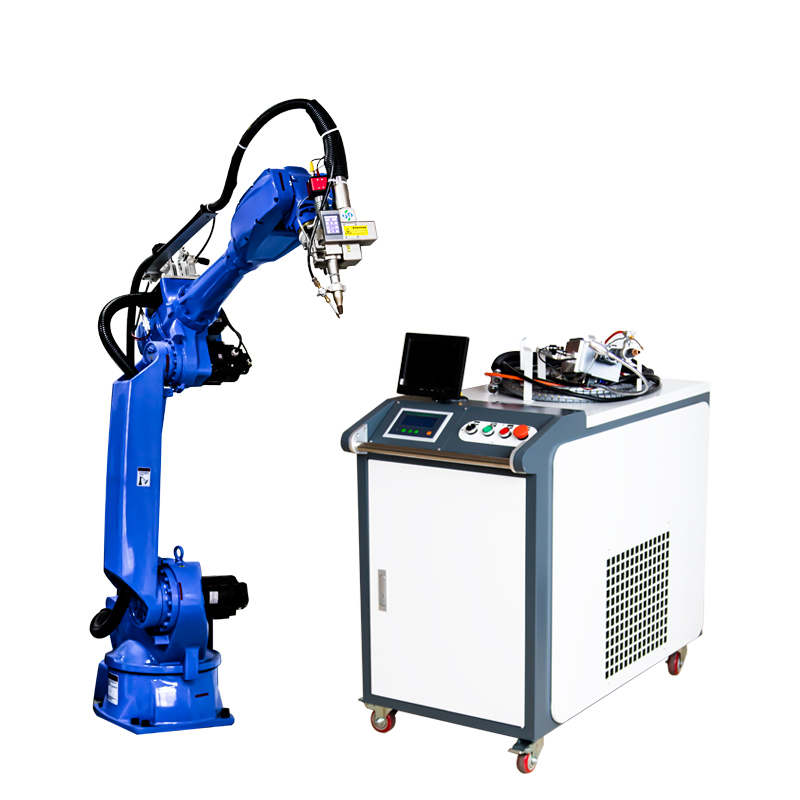
Laser welding robot
Compared with traditional welding systems, laser welding machines provide many important benefits. For example, they create smooth weld seams, reduce heat damage, and improve production speed. In addition, they are easy to integrate with robotic systems and automated production lines.
So, what are the advantages of using a laser welding machine?
Simply put, laser welding machines help manufacturers improve efficiency, reduce waste, increase welding quality, and lower long-term production costs. Furthermore, modern handheld fiber laser welding machines are easier to operate than traditional welding equipment.
This guide explains the major advantages of laser welding technology while also covering industrial applications, automation trends, cost benefits, and smart manufacturing solutions. At the same time, this article is optimized for Google SEO, AI search summaries, EU and North America B2B markets, and independent industrial equipment websites.
What Is a Laser Welding Machine?
A laser welding machine uses a concentrated laser beam to join metal or thermoplastic materials together. During the process, the laser produces intense heat in a very small area. Then, the material melts quickly and forms a strong weld after cooling.
Unlike traditional welding methods, laser welding is a non-contact process. Therefore, it reduces physical stress on the material surface. In addition, the process creates cleaner and more precise weld seams.
Most modern laser welding systems include:
- Fiber laser source
- Welding gun or welding head
- Cooling system
- Control software
- Wire feeder
- Safety protection system
Nowadays, handheld fiber laser welding machines are especially popular because they are portable, flexible, and easy to use.
How Does Laser Welding Work?
Laser welding works by focusing high-energy laser light onto a small welding area. Because the laser energy density is extremely high, the metal melts very quickly.
Next, the molten material cools naturally and forms a strong connection. Meanwhile, the surrounding material receives much less heat compared with traditional welding methods.
As a result, laser welding provides:
- Narrow weld seams
- Deep penetration welding
- Smooth welding surfaces
- Low material deformation
- High welding precision
Furthermore, modern fiber laser welding systems support automation software, robotic arms, and conveyor integration. Consequently, factories can improve both production speed and operational consistency.
Main Advantages of Using a robot Laser Welding Machine
Laser welding technology offers many advantages for industrial production. More importantly, these benefits help manufacturers improve product quality while reducing operating costs.
1. High Welding Precision
One of the biggest advantages of laser welding is high precision.
Because the laser beam focuses on a very small area, the welding seam becomes narrow and accurate. Therefore, manufacturers can weld complex parts more easily.
For example, industries such as aerospace, electronics, battery manufacturing, and medical device production require extremely precise welding quality. In these industries, even small welding errors may create serious problems.
Fortunately, precision laser welding machines solve this challenge. Moreover, they help companies maintain stable production standards.
At the same time, laser welding reduces defects such as:
- Uneven weld seams
- Surface burn marks
- Welding gaps
- Excessive deformation
Consequently, manufacturers improve overall product quality.
2. Faster Welding Speed
Another major advantage is high welding speed.
Traditional welding methods often require slower manual operation. However, laser welding systems work much faster because the concentrated laser heat melts the material almost instantly.
As a result, factories can:
- Increase production output
- Reduce manufacturing time
- Improve delivery speed
- Lower labor costs
In addition, automated laser welding systems can operate continuously for long production cycles. Therefore, large-scale manufacturers benefit greatly from fiber laser welding technology.
Meanwhile, handheld laser welding machines also improve productivity for small and medium-sized businesses.
3. Lower Heat Affected Zone
Traditional welding usually creates a large heat affected zone. Because of this, materials may warp or deform during welding.
However, laser welding concentrates heat into a very small area. Therefore, the surrounding material experiences much less thermal stress.
This advantage helps reduce:
- Material deformation
- Surface discoloration
- Burn-through
- Internal stress
- Product damage
As a result, laser welding is ideal for thin metal processing and precision sheet metal fabrication.
For instance, stainless steel kitchenware manufacturers often choose laser welding because it creates cleaner and smoother surfaces.
4. Strong and Durable Weld Quality
Laser welding creates strong weld joints with excellent durability.
Because the laser energy penetrates deeply into the material, the final weld becomes highly stable. In many cases, the weld strength matches or even exceeds the base material strength.
Therefore, industries that require reliable structural performance prefer laser welding systems.
These industries include:
- Automotive manufacturing
- Aerospace production
- Industrial machinery
- Medical equipment
- New energy battery manufacturing
Moreover, laser welding provides repeatable results. Consequently, manufacturers can maintain consistent welding quality across large production batches.
5. Cleaner Welding Process
Traditional welding often produces large amounts of:
- Smoke
- Welding slag
- Spatter
- Grinding residue
As a result, additional post-processing is usually required.
In contrast, laser welding produces cleaner weld seams with minimal spatter. Therefore, factories spend less time on polishing and grinding.
Additionally, cleaner welding improves product appearance. This is especially important for decorative stainless steel products and visible metal surfaces.
At the same time, cleaner production environments improve workplace safety and operational efficiency.
6. Easy Automation Integration laser welding vs TIG welding
Today, smart manufacturing is growing rapidly across global industries. Therefore, factories need welding solutions that support automation.
Fortunately, laser welding machines integrate easily with:
- Robotic arms
- CNC systems
- Conveyor systems
- AI inspection systems
- Smart factory software
Because of this compatibility, manufacturers can build fully automated production lines.
Furthermore, robotic laser welding systems improve:
- Production consistency
- Welding accuracy
- Manufacturing speed
- Quality control
Consequently, laser welding technology plays an important role in Industry 4.0 manufacturing.
7. Lower Long-Term Operating Costs laser welding machine for battery manufacturing
Although laser welding machines may require higher initial investment, long-term operating costs are usually lower.
This happens because laser welding reduces:
- Consumable usage
- Maintenance frequency
- Labor costs
- Rework rates
- Downtime
In addition, fiber laser welding systems consume less electricity than many traditional welding systems.
Therefore, manufacturers often achieve better return on investment over time.
Meanwhile, fewer consumables also help businesses reduce inventory costs.
8. Easy to Learn and Operate laser welding machine for automotive industry
Modern handheld fiber robot laser welding machines are designed for user-friendly operation.
Compared with traditional TIG welding, laser welding often requires less operator experience. Therefore, training time becomes shorter.
In addition, many handheld laser welders include:
- Smart control interfaces
- Automatic parameter settings
- Stable laser output
- Automatic wire feeding
As a result, operators can achieve high-quality welding more quickly.
Furthermore, businesses facing labor shortages benefit greatly from easier welding systems.
9. Excellent Welding Appearance
Laser welding creates smooth, clean, and visually attractive weld seams.
Because the welding area is narrow, surface quality improves significantly. Therefore, manufacturers often reduce or eliminate post-polishing processes.
This advantage is especially useful for:
- Stainless steel furniture
- Kitchen equipment
- Decorative metal products
- Elevator panels
- Metal cabinets
Moreover, better weld appearance improves customer satisfaction and product value.
10. Wide Material Compatibility
Robot Laser welding machines can process many types of materials.
Common materials include:
- Stainless steel
- Carbon steel
- Aluminum
- Brass
- Copper
- Titanium
- Galvanized steel
Additionally, fiber laser welding systems can weld both thin and thick materials efficiently.
Because of this flexibility, laser welding technology supports many industrial applications.
ta-end=”9996″>Fiber Robot Laser Welding Machine Advantages
Fiber robot laser welding machines are currently among the most advanced welding systems available.
High Energy Efficiency low maintenance laser welding machine
Fiber laser systems convert electrical energy into laser energy very efficiently.
As a result, electricity consumption decreases while welding performance improves.
Therefore, manufacturers reduce operating expenses over time.
Long Service Life laser welding machine for aluminum
Most fiber laser sources can operate for more than 100,000 hours.
Because of this long lifespan, maintenance requirements remain low.
Furthermore, fewer replacement parts reduce production interruptions.
Stable Laser Beam Quality
Fiber laser welding systems provide stable beam quality over long operating periods.
Consequently, factories achieve consistent welding results in mass production environments.
Compact Machine Design
Many fiber laser welding machines have compact structures.
Therefore, manufacturers save factory space while improving workflow flexibility.
Meanwhile, portable handheld laser welding machines are especially useful for mobile welding applications.
Handheld Laser Welding Machine Benefits
Handheld laser welding machines are becoming increasingly popular worldwide.
Flexible Welding Operation laser welding machine for sheet metal
Operators can move the welding gun freely around complex structures.
As a result, handheld laser welding works well for:
- Large metal products
- Outdoor projects
- Maintenance work
- Irregular structures
Faster Than Traditional TIG Welding
Handheld fiber laser welding machines are often much faster than TIG welding systems.
Because of this speed advantage, production efficiency increases significantly.
At the same time, labor costs decrease.
Lower Skill Requirements automated metal welding system
Traditional welding often requires highly experienced welders. However, handheld laser welding systems are easier to operate.
Therefore, businesses can reduce training costs and solve labor shortage problems more effectively.
Reduced Post-Processing
Laser welding creates cleaner seams with less spatter.
Consequently, manufacturers spend less time grinding and polishing welded surfaces.
Laser Welding vs Traditional Welding Methods
Laser Welding vs TIG Welding
Traditional TIG welding provides good quality, but it also has limitations.
TIG Welding Challenges
- Slower welding speed
- Larger heat affected zone
- Higher labor intensity
- More post-processing
Laser Welding Benefits smart manufacturing welding solution
- Faster welding
- Cleaner seams
- Better automation
- Lower deformation
- Higher efficiency
Because of these advantages, many manufacturers are switching from TIG welding to fiber laser welding machines.
Laser Welding vs MIG Welding
MIG welding is common in industrial production. However, it often creates more spatter and deformation.
In contrast, laser welding provides:
- Better precision
- Cleaner weld appearance
- Lower thermal damage
- Improved automation compatibility
Therefore, laser welding technology is becoming more popular in modern manufacturing industries.