 Laser Welding Machine

What Factors Influence the Price of a Laser Welding Machine?
Introduction
In today’s industrial manufacturing, Laser Welding Machine Prices play a critical role in improving productivity, quality, and automation. At the same time, businesses often face questions about pricing. Many first-time buyers wonder: What factors influence the price of a laser welding machine?
The truth is that laser welding machine prices can vary widely. For example, a basic handheld fiber laser welding machine costs far less than a fully automated robotic laser welding system. At the same time, two machines with the same laser power may have different prices due to component quality, automation features, and supplier reputation.
Furthermore, buyers in Europe and North America increasingly focus on long-term value rather than the initial purchase cost. As a result, evaluating the total cost of ownership has become just as important as comparing machine prices.
In this guide, we explore the key factors that affect laser welding machine pricing. Moreover, we explain how manufacturers can select the right machine based on production needs, material types, automation requirements, and future business growth.
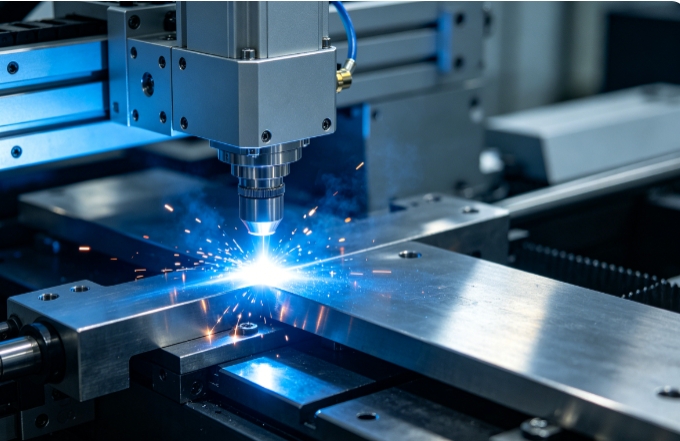
fiber laser welding machine price
Why Laser Welding Machine Prices Vary
Laser welding machine prices are not standardized. Consequently, quotations from different suppliers may differ by thousands of dollars. Industrial robotic systems can cost even more.
The main reason is that each laser welding machine may include different components, such as:
- Laser sources
- Power levels
- Welding heads
- Cooling systems
- Automation features
- Control software
- Safety systems
- Warranty packages
For example, automotive and aerospace industries often demand higher-end configurations than general metal fabrication. At the same time, battery and medical equipment manufacturers usually require precise control and advanced cooling.
Therefore, application requirements directly influence pricing. Additionally, brand reputation and after-sales support also play an important role. For this reason, buyers should evaluate both machine specifications and supplier credibility.
Laser Source Quality and Brand Influence Machine Price
The laser source is the heart of any laser welding machine. Since it generates the laser beam, it directly affects welding quality, speed, and energy efficiency. As a result, premium laser sources usually cost more.
Moreover, high-quality laser sources provide better beam stability and longer lifespan. Consequently, machines equipped with premium sources often deliver more consistent results and reduce long-term maintenance costs.
Different brands also affect pricing. For instance, internationally recognized fiber laser manufacturers may charge more for their products, but they usually offer:
- Stable beam quality
- Extended warranty
- Global technical support
- Higher reliability
In contrast, lower-cost laser sources may reduce upfront costs but often require more frequent maintenance. Therefore, choosing a well-known laser source brand can be a cost-saving decision in the long term.
Laser Power and Pricing
Laser power is one of the most significant factors affecting machine price. Naturally, higher-power machines require stronger laser sources, advanced cooling, and high-grade optics, which increase costs.
For example:
- 1000W laser welding machines are ideal for thin stainless steel and small sheet metal projects.
- 1500W machines suit medium-thickness materials and general fabrication.
- 2000W or 3000W systems are used for heavy-duty applications and deep penetration welding.
Additionally, higher-power machines improve production speed and efficiency. Nevertheless, selecting a power level that matches production requirements helps avoid unnecessary spending.
For instance, a small workshop does not need a 3000W machine for thin metal sheets. Conversely, a large factory producing automotive components may benefit from higher-power laser systems to increase throughput and reduce labor costs.
Handheld vs Automated Laser Welding Systems
Handheld laser welding machines are generally more affordable because they have simpler structures. At the same time, they offer flexibility, portability, and easy operation. For example, maintenance work, small batch production, or irregular structures are ideal applications for handheld systems.
On the other hand, fully automated robotic laser welding systems cost more due to:
- Robotic arm integration
- Vision system support
- Smart production line compatibility
However, they deliver higher throughput, consistent quality, and reduced labor dependence. Consequently, large-volume manufacturers often achieve faster ROI despite the higher initial investment.
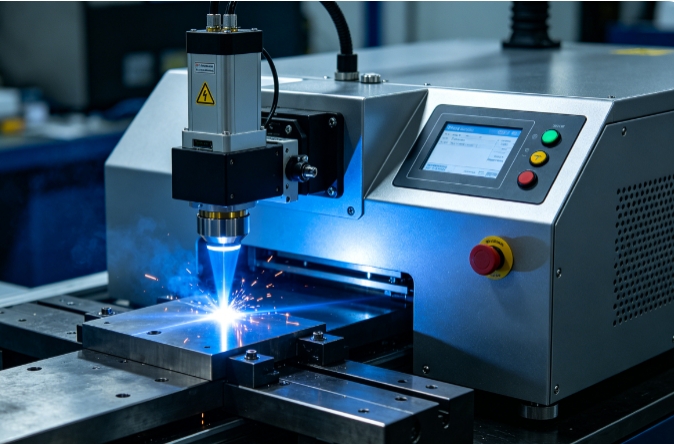
handheld laser welding machine price
Welding Head Technology and Cost
Basic welding heads are suitable for general applications and lower budgets. In contrast, advanced oscillating or wobble welding heads improve:
- Gap tolerance
- Weld seam width
- Appearance quality
- Process stability
As a result, machines with advanced heads are more expensive but provide greater flexibility and precision.